'Oinez ikasi orduko, hegan egiten ahantzi' Anari

Showing posts with label discrimination. Show all posts

20101215

日本の民族問題

外から見ると日本は一つの民族だと思います。でもそうではありません。歴史的に日本は、他の国も、一つの言葉と一つの文化の上に作られました.一般的に言えば、日本は、多分フランスも、成功をしたり、一つの文化の上に作られて、両国では他の違う文化が見えなくなってきました。他の国は、例えばスペインとか、一つの文化にまとめたかったけれども、結果的に国の中の他の文化とか言葉などがなくならずに残って強くなりました。国を作るところ一緒にできる人もいる、例えばスイスなどのように、違う文化と言葉でも,ドイツ語とフランス語とイタリア語とロマンジュ語話したり、あまり問題ないで、一緒に一つの国を作りました。

現在日本に色々な民族がいる。一番多いのはアジアの他の民族とかアメリカへ移住をした日本人と関係があるグループですけど、世界の他の先進地域に比べて、移民が少ないです。では移民が多すぎると思っている日本人もいる。

国連によって日本で:
  • 人種差別と差別はまだ日本でも一般的です
  • 日本は20年前に労働者を受け入れ始めたが、まだ移民の権利保護を提供するための法律を採用していない
  • 日本政府は移民とその子供たちの人権を保護するための多くの課題に対応していない
  •  多くの場合移民の苦情は警察によって、拒否されました
  • 移民が差別を受けることなく、住宅、教育、健康の観点から共生できる社会制度作ることが必要
  • これまで外国人労働者の保護政策に失敗しました

海外から来ている人が受けている取り扱いを分かるように、見えなくなって、まだいるその文化歴史的に受けた取り扱いを見てみよう。

このプレゼンテーションで三つのグループに関して話したいと思います。そのグループはアイヌと部落民と琉球というグループです。

アイヌ


アイヌというグループは北海道と千島列島とサハリンの土着民です。日本人と混ぜられたから、現在何人がいるか言うのはやや難しいですが、量は2万5千から20万までです。

アイヌは狩りとか魚釣りをしたり、かれらの宗教は自然でした。1300年のころに日本人と始めの接触を受けましたが、1868年の明治維新まで問題が起こりませんでした。1868年に北海道が日本に付加されて、次の36年で地と言葉と宗教と習慣などなくりました。アイヌの地が日本人に取られて、西部スタイルの農場が作られました.日本語を話させて、日本語の名前を使わせると入れ墨の禁止も続きました。そして日本人に「犬」を呼ばれました。

2008年でアイヌ土着民の地位が日本の政府から承認されましたが、その承認は今さら遅いです。そして本当の承認ではなくて、アイヌセンターは札幌から遠くて、田舎でつくりました。だからアイヌは、今日も表には見えなくなっています。

部落民


神道の世界で汚い仕事すると汚いひとです。だから昔から死刑執行人とか、葬儀人とかとか革人とか肉屋人など汚いだと思われて浮浪者にされました。例えば別の寺が使って、東京で路面電車が作られる時に部落民近所は最後でした。

法律的にこの区別は明治維新まで続いて、実は、後でもありました。1859年に裁判官は部落民が普通の日本人の1/7だと言って、今はも西日本の大阪と京都と広島などで起こっていますが、ミデアではタブーです。1975年に部落民とかれるの家どこだと教えてあった本が作られました。その本はNISSANとかTOYOTAとかHONDAとかDAIHATSUなど会社に使われて、部落民を結ばないようにしました。今日はも使われているのでは思われています。

琉球民族


沖縄の土着民です。1375年から明治維新まで王国でした。17世紀に九州のさつまはんは琉球を制服しましたが、明治維新と、前も見た猛烈な過程を始めました:人の名前が日本語に代わて、教育システム通り日本語を課すされました。

戦争後から1972年まで沖縄はアメリカ合衆国に治められました。その時間の中で琉球語を話せる人はまだ多かったですが、今日は少ないです。1995年にされた調査は沖縄の人の40.6%が自分は琉球人だと思って、21.3%が日本人だと思っているのことがわかります。

最後に私は知っている人について話したいと思いなす。私の友達の話すです、れなさんとパウロさんの話です。れなさんは日本人ですけど、彼女のお父さんは琉球人だから、差別を避けるために子供のころからお母さんの名前を使っています。バスクのパウロさんとれなさん結婚してこたろちゃん生まれました。法律で、パウロさん日本人じゃないので、こたろちゃんには父がいません。後で戦争後から日本で住んでいる韓国人は日本の国民になることができません。全部ひどいことだと思うので、変わることは必要だと思います。

20100803

日本の外国人党

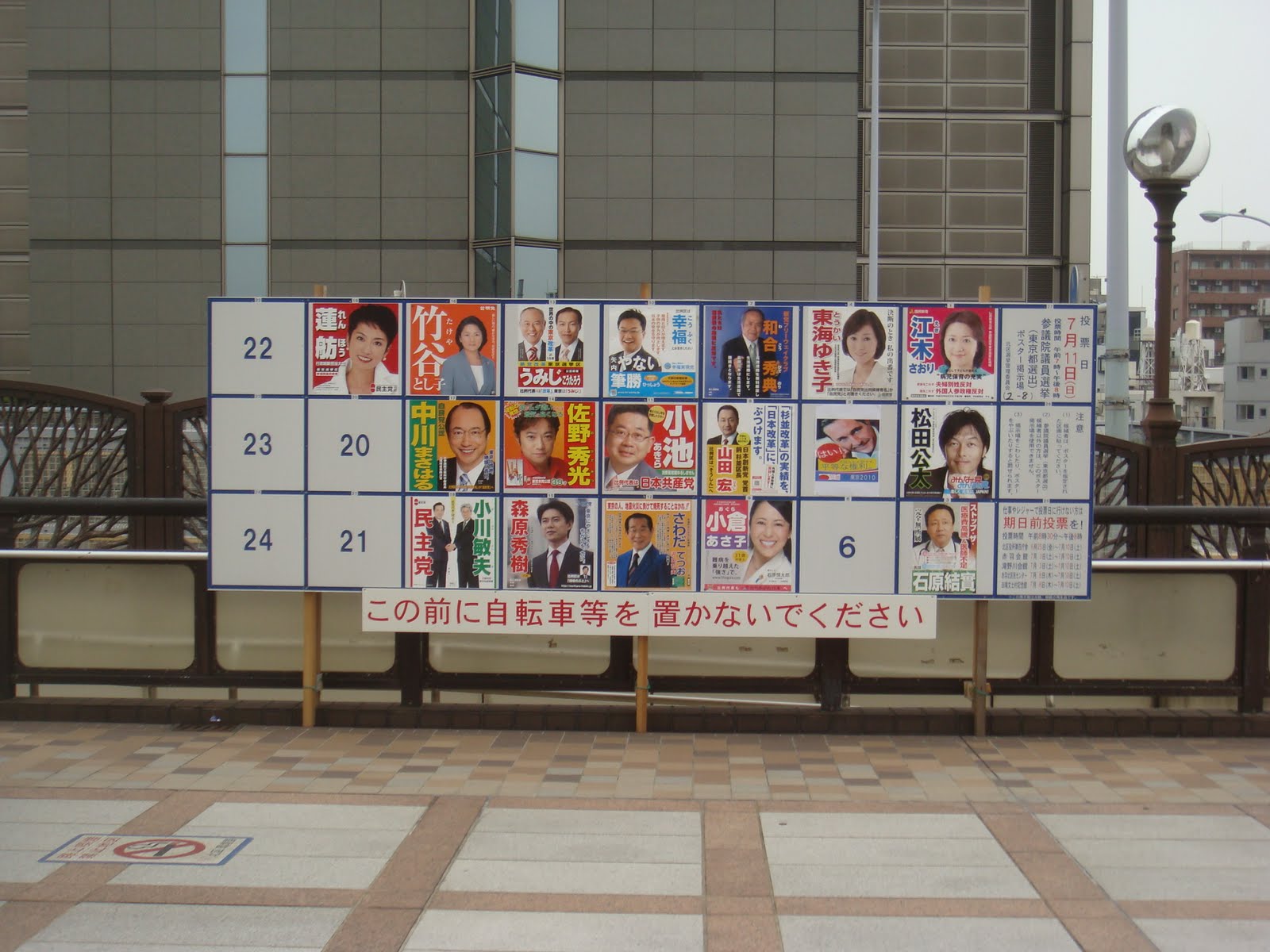
Intervention in the streets of Tokyo. Modified political campaign poster on official election propaganda boards.  

Posters were placed on space no. 5 on official election propaganda boards in various locations around Kita-ku and Arakawa-ku between 5 and 6 AM and removed a few hours later. Lack of financial as well as human resources didn’t make a broader and potentially more effective intervention possible. Maybe next election? 


Japan is a country with a very little immigration flow. And yet in the Japanese society, the idea of too many immigrants arriving and settling in is taking hold. However, statistically, Japan hardly does get any immigration, especially when compared to the rest of the industrialized countries. The outcry towards the conservation of traditional values, supposedly threaten by foreigners coming to Japan, towards keeping Japan Japanese and for the Japanese is, in some cases, almost hysterical. The struggle of the most concerned, the right-wingers driving through Tokyo in Japanese flagged black vans, is undertaken in western black suits and western black ties, which makes it funny, almost surreal, if not pathetic.

The government contributes to the idea of the 'bad gaijin*' with laws that imply the foreigner is a potential criminal, i.e., picture and fingerprints taken at airports or third generation Koreans, descendants of those kidnapped and forced to come to Japan and work as slaves, not being considered citizens and therefore not being able to take part in any election process let alone vote. The media, collaborates with these laws either by not talking about them or endorsing them with passion. The police ask to show their ID to anyone who does not look Japanese in the streets when not rioting into student guest houses. All this adds up to the idea that Japan does not welcome foreigners, and yet, there’s a big contradiction, as many Japanese love anything foreign and Japanese society itself is most welcoming. At least at first.

The 日本の外国人党 (Nihon no Gaikokujin To or Japan’s Foreigners’ Party) does not exist, but it could very well do, as it may be necessary. Such a party is rare in other industrialised countries, true, but that’s maybe because it is perfectly legal there. If other industrialised countries would do the same Japan does with their foreign residents, there would be no Kurdish and Turkish MPs in the German Reichstag, no black ministers in France, no presidents with non-Basque and non-Catalan origins in Basqueland and Catalonia... There wouldn’t even be a Sarkozy, whose father is Hungarian!  Didn’t we all agree racism is bad? Isn’t it politically incorrect to be openly racist also in Japan? Well these laws are racist.

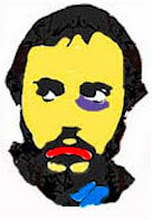
The日本の外国人党 does not exist then, but its candidate does. His name is Heinz-Christian Strache and he is the president of the openly racist neo-Nazi FPÖ (Freiheitliche Partei Österreichs). Just thought it ironic that if for any reason someone like him would come to Japan, he would be in the very same situation he wants to put foreign people through in his country, Austria.

The message of this intervention is, as well as its staging, simple. The poster was taken from the original FPÖ campaign on their website, the original design maintained and new mottos related to Japan and its foreign residents were added. The almost childish in its evidence, populist if you want to and therefore not easy to contradict はい!外国人も人間です (Yes! Foreigners are also Human Beings), and the more political and related to the current injustice/tragedy people who are Japanese but not considered to be are living, (sometimes even by themselves): 平等な権利 (Equal Rights). The name of the candidate appears written in katakana.


*gaijin is slang for foreigner

since2010/6tikから

Die in diesem Blog verlinkten und gezeigten Bilder und Videos von anderen Webseiten und Blogs gehören nicht mir. Ich übernehme für diese Inhalte keine Haftung, auch nicht, wenn der ursprüngliche Inhalt geändert worden ist. Alle Bilder und Videos werden nur zur Kommentierung benutzt und keinerlei für kommerzielle Zwecke verwendet. Sollte es Probleme geben, bitte ich Sie, mich zu kontaktieren. Davon ausgenommen sind meine selbstaufgenommenen Fotos, Videos und Ideen.

Creative Commons-en baimena
This lana is licensed under a Creative Commons Aitortu-EzKomertziala-PartekatuBerdin 3.0 Unported License.